


Augusta Raurica
Open today 10:00–17:00
Get ticketsSign up free — See who's going and message them.
Is this your place? Get the badge for your websiteAbout
Menu & prices
More photos 11
1 / 11


Why go
- The Roman theatre, the largest north of the Alps and described as its best preserved, once held 8,000–10,000 spectators.
- The Kaiseraugst silver treasure: 58 kilograms of silver made into 270 objects, buried after the Castrum was damaged in 352 CE.
- A reconstructed Roman house shows domestic and commercial life through artifacts and reconstructions.
- The longest accessible sewer from Roman times is visible for almost 100 metres, from the central baths toward the Violenbach stream.
Plan your visit
Opening times
From the venue's website · checked 28 Sep 2026
Don't miss
- Schönbühl templeBuilt around 70 AD opposite the theatre; the deity worshipped here is unknown.Across from the theatre
- Main forumThe city’s administrative and commercial centre included a basilica, council chamber and shops.East of the theatre
- Roman underfloor heatingA heating system warmed the marble floor of a wealthy home’s dining room.Near the forum
Know before you go
- The open-air site is accessible year-round, 24 hours a day. Museum hours are daily 10:00–17:00 from March to October and 10:00–15:00 from November to February.
- The ancient site hosts cultural evenings in July and August.
- The 2026 Roman festival was cancelled because of drought and a heatwave.
What's inside
- The Roman Museum tells the city’s history through locally excavated finds.
- The Roman-house annex began as a partial reconstruction of a Roman villa in 1955.
- Excavations have uncovered a shop, bakery, pottery workshop and tile kiln, revealing the city’s working life.
- About 60 people work to conserve finds and make them publicly accessible.
Tips for your visit
- Buy tickets through the Augusta Raurica website.
- Book family workshops and Roman House guided tours at least two months ahead.
- Plan time for both the museum and more than twenty outdoor points of interest.
With kids
- Try training exercises and discover gladiators’ daily lives on the gladiator trail.
- Explore Roman history through hands-on activities.
- Join workshops designed for families.
Interesting facts4
-

About 80% of the built-up area remains unexcavated.
Augusta Raurica - Wikipedia -

A 6.5-kilometre water system supplied public fountains; none of its aqueduct remains.
Augusta Raurica - Wikipedia -

The city exported smoked pork and bacon across the Roman Empire.
Augusta Raurica - Wikipedia -
 66 metres
The upper town’s regular street grid formed blocks measuring about 56 by 66 metres.
Augusta Raurica - Wikipedia
Shorts
-
 Amphitheatre of Augusta Raurica, a glimpse into Roman life in Switzer…My Swiss Lens📸
-
 Waking up in 400CE: Augusta Raurica, Switzerland | AlpsThe Time Jump
-
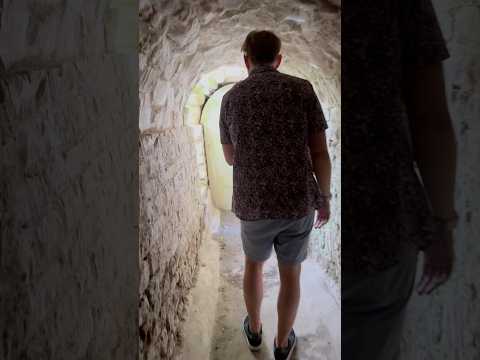 Beneath Augusta Raurica: Journey through ancient Rome's Water Pipes i…KaimarkLifestyle
-
 Roman legions go back to the camp. Augusta Raurica in Switzerland, Ro…Avenir Vento
-
 Reenactment Roman Legion at Augusta RauricaLucaInTheWild
-
 Augusta Raurica - a Brief Info about the Amphitheatres and the ancien…Demetrios_Gladiator
-
 𝐀𝐮𝐠𝐮𝐬𝐭𝐚 𝐑𝐚𝐮𝐫𝐢𝐜𝐚!A Dog's Life!
-
 Gladiator Winning Pose - Römerfest Augusta RauricaDemetrios_Gladiator
History
The Rhine linked Augusta Raurica to much of Rome’s northwestern provinces, while two major roads crossed at the city. Its riverside quarter supported trade, crafts and port activity; residential, political and religious life occupied the terrace above.
- Around 44 BCLucius Munatius Plancus founded the colony near the Rauraci.
- 15–10 BCConstruction and expansion began, with wooden buildings.
- 1st centuryResidential and workshop buildings filled the city blocks as the settlement grew.
- 60–70 ADThe stone theatre, nearby temple and stone forum were built.
- 2nd century ADAugusta Raurica prospered as a trading centre and capital of a local Roman province.
Show all
- Around AD 250An earthquake damaged much of the city.
- Around AD 260The city suffered destruction by Alemanni and/or Roman troops.
- Around AD 280The civilian settlement was largely abandoned.
- Around AD 300A fort beside the Rhine housed Roman troops for about a century; parts of its walls survive.
- 7th centuryThe settlement lost its regional importance to Basel.
- From 1588Basilius Amerbach and Hans Bock documented the rediscovered Roman settlement.
Tours and audio guides
- Family tours in the Roman House
- Sign-language interpretation Offered on selected dates; request interpretation at least two months ahead.
- Tours for visitors with visual impairments
- Audio description, tactile objects and scent samples
How to get there
- TrainTake Basel S-Bahn S1 to Kaiseraugst station, then walk about 750 metres south. The museum, Roman house and visitor facilities are at Giebenacherstrasse 17, Augst.
Accessibility
- Museum wheelchair access The museum is wheelchair accessible with assistance. A wheelchair is available for museum use.
- Roman house rooms A mobile ramp can be borrowed.
- Folding chairs Light folding chairs can be borrowed.
- Assistance and guide dogs Allowed in the museum.
Sources: Augusta Raurica - Wikipedia · Augusta Raurica - Wikivoyage (see) · Augusta Raurica | Roman city | Archaeological P… · Augusta Raurica | Augusta Raurica: Experience -… · Augusta Raurica | Augusta Raurica: Experience -… · Augusta Raurica - Wikipedia · Augusta Raurica - Wikipedia · Augusta Raurica - Wikipedia · checked 28 Sep 2026
- Website
- augustaraurica.ch
- Phone
- +41 61 552 22 22
Eat and drink nearby
Where to stay nearby
Questions and answers
What happened in Augusta Raurica’s amphitheatre?
It hosted animal and gladiator fights, as well as chariot races.
How many bath complexes did Augusta Raurica have?
Three: the women’s baths, central baths and lower-city baths.
Was Augusta Raurica’s city wall completed?
No. Construction began, but the wall was never finished.
When did excavations at Augusta Raurica begin?
Digs began in the 16th century, and the theatre was first excavated in 1582. A full-time excavation team has worked at the site since 1957.
- See who's going — faces, not ticket counts.
- Write to someone who shares your interests — no swipes, no matches, no paywall.
- Pick the event or the place to meet at — and go together.