


 Photo: grumpylumixuser · CC BY 3.0 · edited
 Photo: John from Redcliffe, Australia · CC BY-SA 2.0 · edited
 Photo: Andrii Slonchak from Brisbane, Australia · CC BY 2.0 · edited
 Photo: AyanA123 · CC BY-SA 4.0 · edited
 Photo: Maksym Kozlenko · CC BY-SA 4.0 · edited
 Photo: Patncath · CC BY-SA 4.0 · edited
 Photo: Shannon McGee from Huntsville, USA · CC BY-SA 2.0 · edited
 Photo: Claire Charters · CC BY-SA 3.0 · edited
 Photo: Claire Charters · CC BY-SA 3.0 · edited
 Photo: Tangerineduel · CC BY 4.0 · edited
 Photo: Tangerineduel · CC BY 4.0 · edited
Cape Byron Lighthouse
- Not step-free
Sign up free — See who's going and message them.
About
More photos 11
1 / 11 grumpylumixuser · CC BY 3.0 · edited
Why go
- Australia’s most powerful lighthouse, with a light intensity of 2,200,000 candelas.
- The original Henry-LePaute Fresnel lens, still in use, with 760 prisms across a two-metre-wide lens.
- The 13.5-metre tower stands on a headland 100 metres above the Tasman Sea.
Opening hours
Today10:00 – 16:00Show all
What you see
- Look across the ocean and hinterland, and watch for turtles, dolphins and humpback whales from the headland.
Know before you go
- Opening hours are 10:00–16:00 daily. Guided lighthouse and Maritime Museum tours run on limited days and times; lighthouse tours do not run on Christmas Day.
- Beach access tracks near the cottages are closed after erosion created a dangerous drop-off.
Interesting facts3
-

The original light used six kerosene wick lamps.
Cape Byron Light - Wikipedia -

It was the first lighthouse in Australia to use a mercury float mechanism and the only one with a Henry-LePaute apparatus.
Cape Byron Light - Wikipedia -
 15 seconds
The light flashes white every 15 seconds and projects a continuous red light toward Julian Rocks and nearby reefs.
Cape Byron Light - Wikipedia
Shorts
-
 Australia’s Most Easterly Point 🇦🇺 | Cape Byron LighthouseWheels & Walks AU
-
 Cape Byron LighthousePlumm 🩷
-
 Cape Byron LighthousePlumm 🩷
-
 Byron Bay – Cape Byron LighthouseAussie Myanmar Mate
-
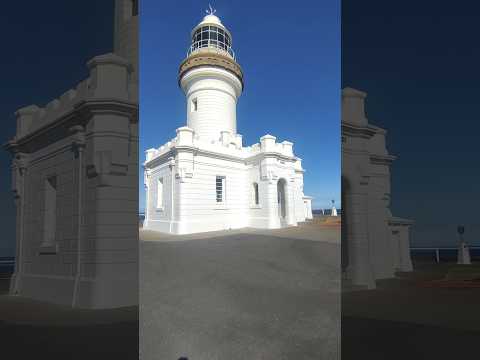 Cape Byron Lighthouse: Australia's most Easterly point. Byron Bay: Ne…FilipposAlx
-
 Cape Byron Lighthouse Walk | Ocean ViewsAustralia 4K Walks & Drives
-
 Cape Byron Lighthouse & Scenic ViewsNirupa Online
-
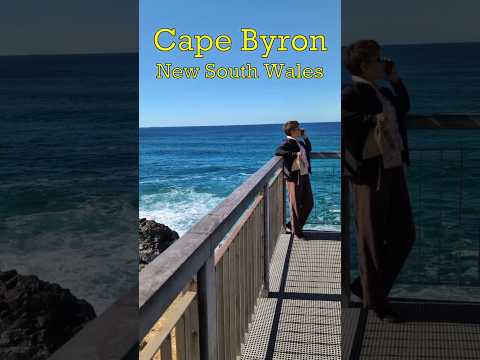 Cape Byron, New South WalesJack and Mallie - All Around Australia.
History
The local Arakwal people call the headland Walgun, meaning “The Shoulder.” The station initially housed one head keeper and two assistant keepers with their families. Charles Harding and Cecil W. Darley designed the lighthouse. Messrs Mitchell & King built it.
- Thousands of yearsThe headland has long been significant to the Bundjalung people. It served as an elevated lookout and a traditional men’s ceremonial and initiation site.
- 15 May 1770Captain James Cook observed the cape and named it after Vice-Admiral John Byron.
- 1899The site was levelled in October.
- 1901Premier John See formally opened the lightstation on 1 December after bad weather delayed the ceremony.
- 1950sThe light changed from kerosene to electricity.
Show all
- 1989The lightstation was automated, and the last keeper left.
- 2004The lighthouse joined the Commonwealth Heritage List.
- 2019The lighthouse joined the New South Wales State Heritage Register.
How to get there
- CarFrom Byron Bay, follow Lawson Street as it becomes Lighthouse Road.
- On footWalk from town via the Walgun Cape Byron walking track through rainforest, beaches, grassland and clifftops.
Accessibility
- Step-free entry The grounds are flat and step-free, reached from the car park along sloping, sealed Lighthouse Road. The lighthouse is not accessible to wheelchair users, prams or mobility scooters.
- Parking One accessible space is in the sealed car park south of Walgun Cape Byron Information Centre.
Sources: Cape Byron Light - Wikipedia · Cape Byron State Conservation Area - Wikivoyage… · Cape Byron Lighthouse | NSW National Parks · Cape Byron Lighthouse | NSW National Parks · Cape Byron Lighthouse | Local alerts | NSW Nati… · Cape Byron Light - Wikipedia · Phare du cap Byron - Wikipedia · checked 30 Sep 2026
Questions and answers
Can I stay overnight at Cape Byron Lighthouse?
The restored former keepers’ cottages offer holiday accommodation.
Can I see Cape Byron Lighthouse from Byron Bay?
Yes. The lighthouse and its light are visible from the township.
How can I reach Clarkes Beach while the cottage tracks are closed?
Use Brooke Drive and the Pass, or go through the Bawaii car park and rest area.
- See who's going — faces, not ticket counts.
- Write to someone who shares your interests — no swipes, no matches, no paywall.
- Pick the event or the place to meet at — and go together.