


Castelo de Bragança
Sign up free — See who's going and message them.
About
More photos 11
1 / 11
 User:Dantadd · CC BY-SA 2.5 · edited


Why go
- The 33-metre keep houses the military museum.
- The summit viewpoint gives a 360-degree panorama of citadel rooftops and the hills of Trás-os-Montes.
- The Domus Municipalis is a distinctive example of Romanesque civil architecture in Portugal.
- The castle guarded Portugal’s frontier near the Spanish border.
Don't miss
- Military museumSee armour, pikes, 16th-century muskets and the 9th-century Visigothic Braganza brooch.Torre de Menagem
- Castle wallsViews reach the Montesinho and Sanábria ranges to the north.Along the castle walls
- Domus MunicipalisThis Romanesque building is thought to have begun as a cistern and later hosted town meetings.Inside the citadel
- Torre da PrincesaThe former governor’s residence is associated with a legend of a captive princess.Inside the citadel
Interesting facts5
-
 17 metres
The keep has a square plan and is 17 metres wide.
Castelo de Bragança - Wikipedia -

The enclosure has three gates and two smaller openings, including Porta da Traição and Postigo do Poço do Rei.
Castelo de Bragança - Wikipedia -
 1466
D. Afonso V raised Bragança to city status in 1466.
Castelo de Bragança - Wikipedia -
 1580
The castle supported D. António during the 1580 succession crisis.
Castelo de Bragança - Wikipedia -

The walls are built from locally abundant shale.
Castle of Bragança - Wikipedia
Shorts
-
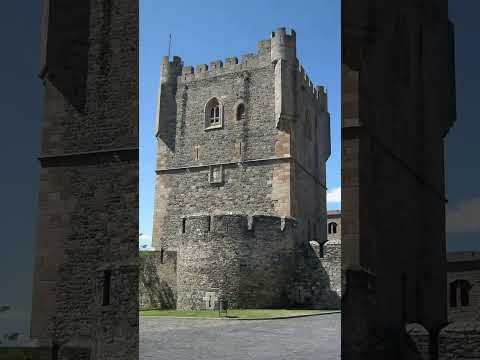 🏰 Castelo de Bragança, PortugalCastle Book
-
 Do Castelo, o Horizonte de BragançaDanielly Sandy
-
 Bragança é conhecida pelo castelo medieval e pela saborea...The Travel Vibe TV
-
 Castelo de Bragança ( Portugal )Leandro Portugal
-
 Castelo de Bragança, Norte de PortugalViajando Geral - Marta e Mauro pelo Mundo
-
 Por dentro das muralhas da cidadela no Castelo de BragançaFD Viagens
-
 Castelo - Bragança - Guimarães - PortugalLeonardo RR
-
 Castelo de BragançaWel Bento
History
Roman improvements and later Muslim rebuilding preceded damage and reconstruction during the Christian reconquest.
- NeolithicA hillfort stood near the present town.
- 1128A document records the castle coming under King Afonso I’s control.
- 1187–1188D. Sancho I granted the settlement a charter, and its first town wall followed.
- 1293D. Dinis ordered a second ring of walls.
- Early 15th century–c. 1439D. João I ordered the reconstruction that largely shaped today’s castle. The keep was completed around 1439, during D. Duarte’s reign.
Show all
- 1509Duarte de Armas recorded the town and castle in his Book of Fortresses.
- 1762Spanish troops damaged the walls and nearby houses before Portuguese forces repelled them.
- Before the Peninsular WarThe eastern section was rebuilt, and the castle repelled Napoleonic troops.
- 23 June 1910The castle was designated a National Monument.
- 1936Restoration and reconstruction of the walls began, and a military museum was established in the keep.
What's inside
- Within the citadel: Igreja de Santa Maria stands on the central parade ground; a medieval pillory is also inside the walls.
- Within the keep: two floors of vaulted rooms.
- The museum’s lower floors display arms and armour from the 12th to 15th centuries, including Portuguese swords.
- Upper-floor exhibits include a Gatling gun, AK-47s and a 1917 Portuguese Mauser.
Tips for your visit
- The lower museum floors focus on medieval arms and armour, including Portuguese swords.
How to get there
- CarThe castle is at Rua da Cidadela, 5301–901 Bragança.
- On footWalk uphill from Bragança’s historic centre to the castle.
Accessibility
- Access between museum floors A steep, narrow spiral staircase links the floors.
- Lift The tower has no elevator.
Sources: Castle of Bragança - Wikipedia · Bragança - Wikivoyage (see) · Castelo de Bragança · Bragança Military Museum: Armor & Weaponry Hist… · Château de Bragance - Wikipedia · Castelo de Bragança - Wikipedia · checked 28 Sep 2026
- Website
- castelo-braganca.pt/
- Phone
- 00351273240020
Questions and answers
What periods does the Castelo de Bragança museum collection cover?
Weapons and armour from the 13th to 20th centuries.
Which medieval object should I look for at Castelo de Bragança?
A 14th-century breastplate.
What relates to the Peninsular War at Castelo de Bragança?
British cannons and Portuguese muskets.
Are there colonial-period exhibits at Castelo de Bragança?
Yes. The collection includes relics from Portugal’s colonial period.
Which early-19th-century firearm is displayed at Castelo de Bragança?
An 1811 flintlock rifle, alongside other 19th-century rifles.
- See who's going — faces, not ticket counts.
- Write to someone who shares your interests — no swipes, no matches, no paywall.
- Pick the event or the place to meet at — and go together.