


Chora Museum
Sign up free — See who's going and message them.
Is this your place? Get the badge for your websiteAbout
More photos 8
1 / 8


Why go
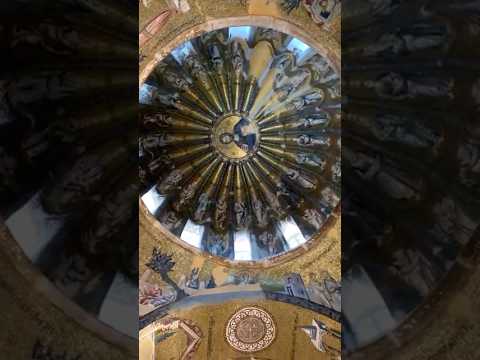
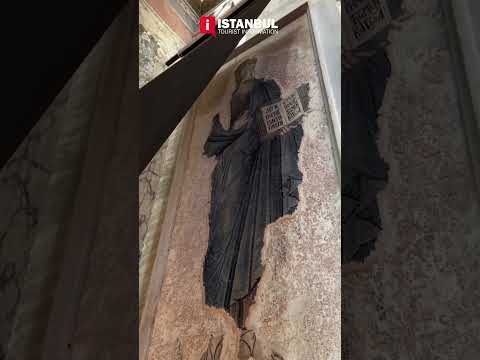
- The mosaics and frescoes, whose liveliness and realism look ahead to early Renaissance painting.
- Portraits and scenes from the Old and New Testament in the mosaics and paintings.
Opening hours
Today09:00 – 16:30Show all
Don't miss
- The Anastasis frescoChrist breaks the gates of Hades and pulls Adam and Eve from their tombs. Art history books cite it as a key example of late Byzantine art.In the apse of the side chapel (parecclesion)
- The Dormition mosaicMary's last sleep before she ascends to Heaven. Jesus holds an infant that symbolises her soul.In the naos, the main hall
- Theodore Metochites presenting the churchA mosaic shows Theodore Metochites kneeling and presenting the church to Christ.In the outer narthex
- The Christ Pantocrator imageChrist Pantocrator sits above the doorway to the inner narthex.Above the doorway to the inner narthex
- Soldier saints with swordsBeside the tombs, soldier saints with swords appear to guard them.In the side chapel, beside the tombs
Know before you go
- Open Monday and Wednesday to Sunday, 09:00–16:30; closed on Tuesdays.
- The building is again a place of Muslim worship, open for prayer since 6 May 2024.
- The frescoes in the men's and women's prayer rooms are covered with cloths; the other frescoes stay visible.
What's inside
- The naos, the main hall, has three surviving mosaics, including the Dormition.
- Two naos mosaics were once icons that flanked the templon, the barrier in front of the sanctuary.
- Images of Christ and Mary dominate the outer narthex and the inner narthex.
- A cycle of scenes from the Virgin's life includes her birth and her parents showing her affection, typical of the late Byzantine era.
- The young Mary turns toward the archangel Gabriel, a scene adapted to a triangular space.
- The Last Judgment shows Christ enthroned, flanked by the Virgin and John the Baptist.
- The side chapel (parecclesion) was a mortuary chapel for family burials and memorials; its walls carry frescoes about salvation.
- The largest dome, 7.7 m across, sits above the centre of the naos; the side chapel's dome, 4.5 m, is the second largest.
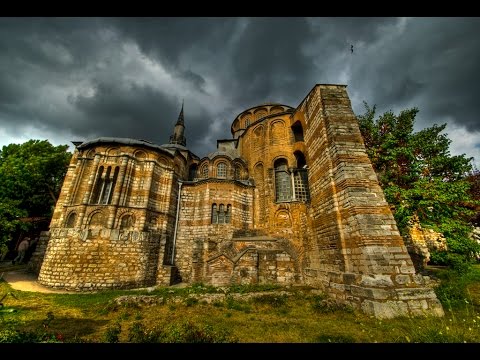
- The building covers 742.5 square metres under six domes, with an inner and outer narthex and a two-storey gallery.
Tips for your visit
- Almost all the frescoes in the side chapel have survived.
- The visit moves through three parts: the narthex entrance hall, the naos and the side chapel.
- The side chapel (parecclesion) lies to the right of the inner narthex.
- Look for the minaret at the south-west corner; it replaced the bell tower when the building became a mosque.
Interesting facts7
-

Its full name translates as the Church of the Holy Saviour in the Country.
The Chora - Wikipedia -

The short name Chora comes from its original site outside the city walls.
The Chora - Wikipedia -

Its cross plan became the model for Orthodox churches in Istanbul until the 18th century.
Saint-Sauveur-in-Chora - Wikipedia -

Its mosaics and frescoes were made roughly in the time of Giotto.
Saint-Sauveur-in-Chora - Wikipedia -

Scholar Maximus Planudes lived at the monastery and restored Ptolemy's Geography.
The Chora - Wikipedia -

Theodore Metochites donated his famous library to the monastery.
The Chora - Wikipedia -

The tomb at the north end is considered certain to belong to Theodore Metochites.
Chora-Kirche - Wikipedia
Shorts



History
The church began as a monastery outside the city walls, and walls later enclosed it within the city's defences. Maria Doukaina rebuilt it as an inscribed cross, and the statesman Theodore Metochites paid for most of its mosaics and frescoes. After the Ottomans converted it into a mosque, the mosaics and frescoes were covered with plaster and lime rather than destroyed, which kept them for later restoration. They were uncovered in the restoration that began in 1948. A court ruling and a presidential decree returned the building to worship, and it reopened for prayer after restoration.
- 4th centuryFirst monastery built on the site, outside the city walls.
- 1077–1081Maria Doukaina rebuilds the church as an inscribed cross.
- 14th centuryTheodore Metochites funds most of the mosaics and frescoes.
- 1511Converted into a mosque; the mosaics are covered, not destroyed.
- 1958Opens to the public as a museum, after the mosaics are uncovered in restoration from 1948.
Show all
- 2019A court ruling orders its conversion back into a mosque.
- 2020A presidential decree makes it a mosque again, and four years of restoration follow.
Sources: The Chora - Wikipedia · TÜRKİYE KÜLTÜR PORTALI · Chora-Kirche - Wikipedia · Saint-Sauveur-in-Chora - Wikipedia · Kariye Camii - Wikipedia · checked 19 Oct 2026
Questions and answers
What are the opening hours of Chora Museum in Istanbul?
It is open Monday and Wednesday to Sunday, 09:00–16:30, and closed on Tuesdays.
Where is Chora Museum in Istanbul?
It stands at Kariye Mahallesi, Kariye Camii Sokak 18, in the Edirnekapı quarter of Fatih, close to the Theodosian walls.
Is Kariye Museum the same place as Chora Museum?
Yes. Kariye comes from the Greek name Chora; the building is also called Kariye Kilisesi and Kariye Camii.
Can you still see the mosaics and frescoes at Chora Museum?
Yes. The mosaics were uncovered in restoration work from 1948 to 1958. Frescoes in the men's and women's prayer rooms are covered with cloths; the other frescoes stay visible.
What is Chora Museum known for?
Its mosaics and frescoes date roughly to the time of Giotto, and their liveliness and realism look ahead to early Renaissance frescoes.
- See who's going — faces, not ticket counts.
- Write to someone who shares your interests — no swipes, no matches, no paywall.
- Pick the event or the place to meet at — and go together.