
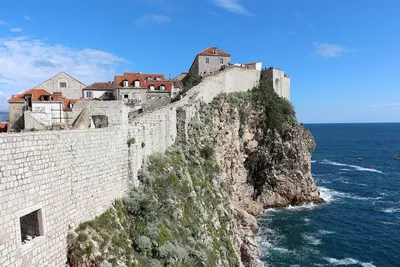
 Photo: Bernard Gagnon · CC BY-SA 4.0 · edited
 Photo: Bernard Gagnon · CC BY-SA 4.0 · edited
 Photo: photographerglen · CC BY-SA 2.0 · edited
 Photo: Natalia Semenova · CC BY 3.0 · edited
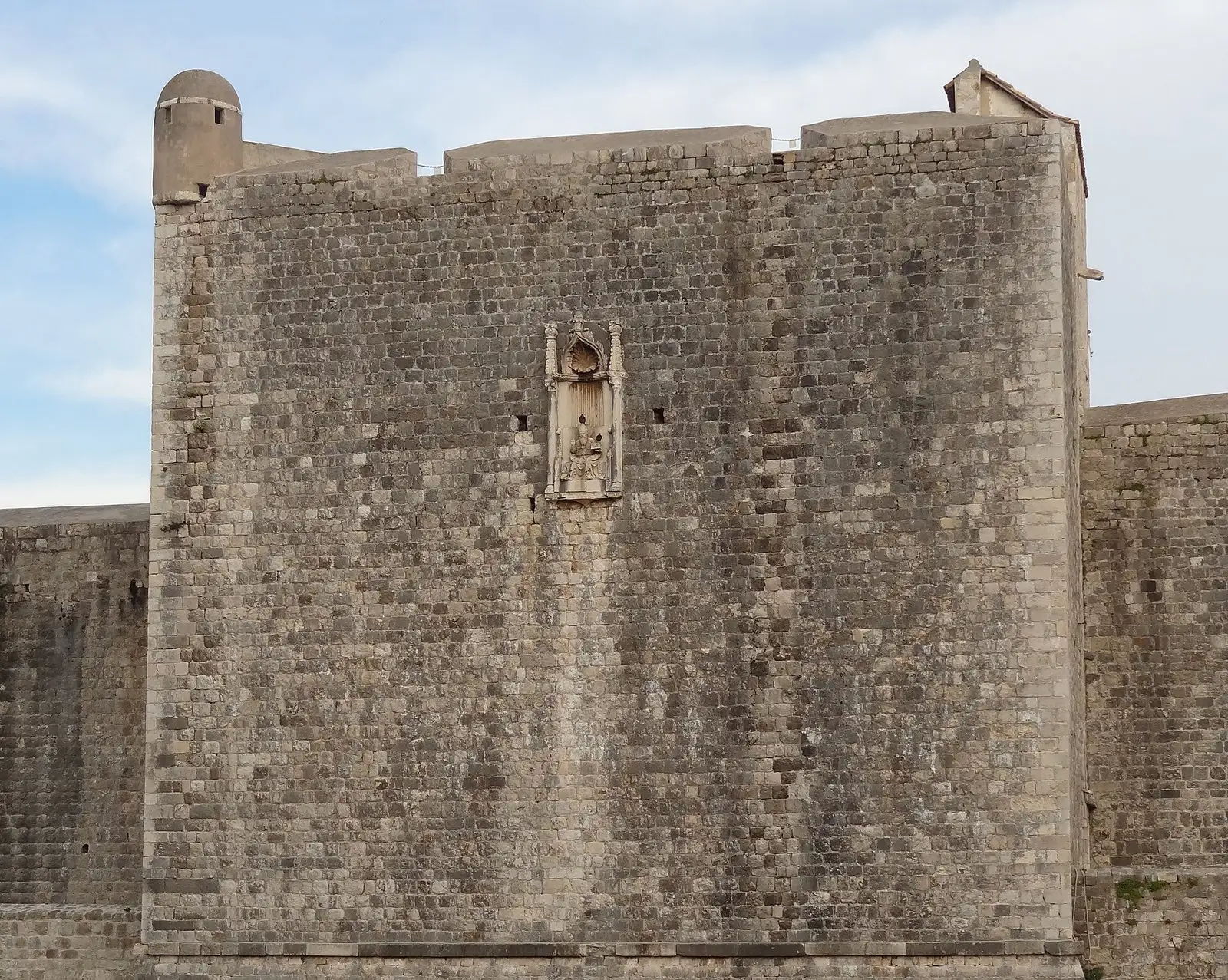 Photo: Bernard Gagnon · CC BY-SA 4.0 · edited
 Photo: Bernard Gagnon · CC BY-SA 4.0 · edited
 Photo: Bernard Gagnon · CC BY-SA 4.0 · edited
 Photo: Bernard Gagnon · CC BY-SA 4.0 · edited
 Photo: Dave Lonsdale · CC BY 2.0 · edited
Dubrovnik City Walls
Sign up free — See who's going and message them.
About
More photos 9
1 / 9 Bernard Gagnon · CC BY-SA 4.0 · edited

Why go
- The walk along the walls, one uninterrupted course past the towers and fortresses.
- The stage inside Lovrijenac fortress, known for performances of Hamlet.
- The wooden drawbridge at the Pile Gate, which was raised each night for a ceremony handing the city keys to the rector.
- The cannon foundry found by excavation under Minčeta Tower, now a museum.
Opening hours
Today08:00 – 16:00Show all
Don't miss
- Minčeta TowerThe round fortress on the north side, the most prominent point facing the land.North side of the walls.1464 On the map
- Fort BokarThe oldest surviving casemate fortress in Europe.West side, guarding the Pile Gate.1461–1463 On the map
- St. John FortressAlso called Mulo Tower, it guards the entrance to the old port.Southeast side, by the old port.14th–16th century On the map
- Revelin FortressA 15th-century fortress that guarded the Ploče Gate.East side, by the Ploče Gate.15th century On the map
- Statue of Saint BlaiseSaint Blaise, the city's patron, stands above the main gateway.Above the main gateway into the Old Town. On the map
Tips for your visit
- A stone bridge with two Gothic arches leads to the Old Town gate.
- Towers guard the walls on all four sides.
- On the land side, look for the smaller sloping wall in front of the main wall, built to guard against cannon fire.
Legends and hidden details
- According to legend, townspeople credited the failed Venetian attack of 948 to Saint Blaise, later adopted as the city's patron saint.
Interesting facts6
-

Stone was in short supply, so newcomers had to bring a stone sized to their own body.
Dubrovačke gradske zidine - Wikipedia -

An inscription above the Lovrijenac gate says freedom is not for sale, even for all the world's treasures.
Walls of Dubrovnik - Wikipedia -

Ten large cannons defended Lovrijenac, and the largest was called Lizard.
Walls of Dubrovnik - Wikipedia -
 120 cannons
The walls once mounted more than 120 cannons.
Stadtmauer von Dubrovnik - Wikipedia -
 25 metres
In places the walls rise to 25 metres, and the land side is 4 to 6 metres thick.
Walls of Dubrovnik - Wikipedia -

Fort Bokar is counted among the most beautiful functional fortifications.
Walls of Dubrovnik - Wikipedia
Shorts
-
 ☀️ Dubrovnik Old Town City Walls…isn’t it lovely?YanaAleksss
-
 Dubrovnik City Walls: 40 Euro vs 15 Euro Attraction?1SWELL
-
 Dubrovnik Walls - Walking the city wallsMorten Smalby - Expat in Croatia
-
 Croatia 🇭🇷 Dubrovnik City WallsMJ-Travel
-
 Discover Dubrovnik's city wallsDW Travel
-
 Dubrovnik city walls | mini travel vlogAimee Rebecca
-
 Dubrovnik City Walls | Croatia | EuropeYour Travel Chokri
-
 Did you know About Dubrovnik City Walls History ?raju borda
History
The walls were built for defence mainly between the 13th and 17th centuries, and took their present form in the 15th and 16th. The old town's area was already fixed when walling began, so the walls could not enclose more space. Gunpowder led to the walls being strengthened against artillery attacks. During the 1991–1992 siege the walls resisted modern weapons better than newer buildings on the periphery. They are credited with sparing more old-town buildings from destruction, yet 563 of 824 buildings inside the Old Town were hit by projectiles.
- 866–867A fifteen-month siege is lifted after Basil I sends a fleet to relieve the city.
- 1453News of the fall of Constantinople prompts the building of Minčeta Tower.
- 1461–1464Michelozzo di Bartolomeo of Florence works on the walls and builds Fort Bokar in 1461–1463.
- 1464Minčeta Tower is completed by many builders, including Juraj Dalmatinac, and becomes a symbol of the unconquerable city.
- 1667An earthquake strikes; the walls survive it and are preserved to this day.
Show all
- 1979The old town, with much of the walls, joins the UNESCO World Heritage list.
- 1991–1992The walls are besieged again during the fighting around the town.
Sources: Walls of Dubrovnik - Wikipedia · Dubrovnik - Wikivoyage (see) · Stadtmauer von Dubrovnik - Wikipedia · Murs de Dubrovnik - Wikipedia · Dubrovačke gradske zidine - Wikipedia · checked 17 Oct 2026
Questions and answers
Where is the main entrance to the Dubrovnik City Walls?
The main entrance is on Stradun, inside the Pile Gate. Two more entrances are by St. John Fortress and at the Customs House gate.
How long are the Dubrovnik City Walls?
The walls run about 1,940 metres in an uninterrupted course around most of the Old Town. They rise to about 25 metres at their highest point.
How many visitors do the Dubrovnik City Walls get?
More than 1.2 million visitors have come to the walls. The walls also set a one-day visitor record in 2015.
Are the Dubrovnik City Walls a UNESCO World Heritage site?
Yes. The Old Town, which holds much of the walls, is on the UNESCO World Heritage list.
How many fortresses are on the Dubrovnik City Walls?
Five fortresses stand on the walls. Minčeta, Fort Bokar and St. John Fortress are built into the wall. Revelin and St. Lawrence stand apart from it.
- See who's going — faces, not ticket counts.
- Write to someone who shares your interests — no swipes, no matches, no paywall.
- Pick the event or the place to meet at — and go together.