


El Castillo
- from MXN 592
Sign up free — See who's going and message them.
Is this your place? Get the badge for your websiteAbout
More photos 6
1 / 6


Why go
- Nine stepped levels rise to a summit temple; the pyramid reaches 30 metres overall.
- Life-size carvings of warriors in Toltec clothing and armament flank the temple doorway.
Opening hours
Today08:00 – 16:30Show all
Don't miss
- North stairway serpent headsTwo stone snake heads mark the foot of the north stairway; the other stairways have none.At the base of the north stairway.
- Unrestored south sideThe south face remains unrestored, while the north, west and east sides were restored.South side of the pyramid.
Know before you go
- Visitors may walk around the pyramid but cannot climb it or enter its chambers.
Tips for your visit
- Expect large crowds at the spring equinox: the shadow effect draws thousands of visitors.
Best time to visit
- For the equinox effect, visit in the afternoon around the March or September equinox. The pattern can appear over roughly five days around each equinox.
With kids
- Children can walk around the pyramid, but climbing is prohibited.
Interesting facts4
-

The pyramid stands above a water-filled cenote, near four others: Sacred Cenote to the north, Xtoloc to the south, Kanjuyum to the east and Holtún to the west.
El Castillo, Chichen Itza - Wikipedia -
 260 decorative
Its 260 decorative squares correspond to the 260 days of the Tzolkin calendar.
Templo de Kukulcán - Wikipedia -

Its design combines Toltec and Maya architecture.
Pyramide de Kukulcán - Wikipedia -

The temple entrance has two pillars shaped like snakes with raised, backward-curving bodies.
Pyramide des Kukulcán - Wikipedia
Shorts
-
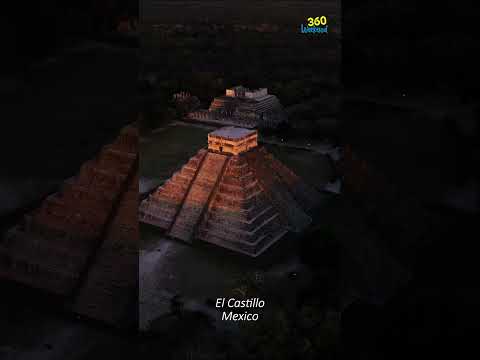 El Castillo From Above | Epic Drone Views of Chichén Itzá's Temple of…360 Weekend
-
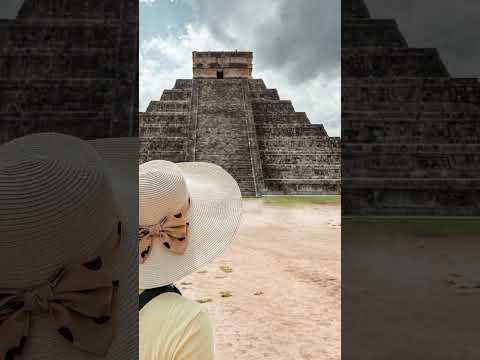 El Castillo Chichen Itza, MexicoYour Travels
-
 El Castillo aka Temple of Kukulcan, step-pyramid, Chichen-Itza, MexicoAYidsTravels
-
 Mexican Pyramid's Hidden Passage to The Underworld Cenotes Chichen It…DeDunking
-
 El Castillo, Chichen Itza From AboveMiraLab AI
-
 Building Chichen Itza – How the Maya Built El Castillo Pyramid | Ston…Stone and Time
-
 Tourist reportedly detained after climbing to top of Mayan pyramid El…ABC News
-
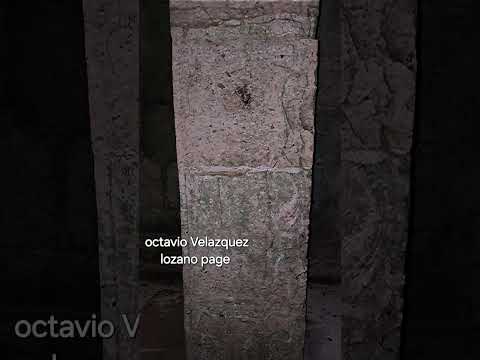 Inside El Castillo in Chichèn-Itzaoctavio velazquez lozano
History
Investigations have identified two earlier construction phases within the visible pyramid.
- 550–800The pyramid’s substructures date from this period.
- 8th–12th centuriesMaya builders developed the temple in stages as a temple to Kukulcán.
- 1566Friar Diego de Landa described the temple in a manuscript about Yucatán.
- 1843John Lloyd Stephens published a detailed account of the pyramid.
- 1927Exploration and reconstruction began with Mexican archaeologists involved.
Show all
- 1930sJ. Erosa Peniche investigated the earlier pyramid through tunnel excavations.
- 1932Excavators found a box of coral, obsidian and turquoise objects beside human remains. The objects are now in Mexico City’s National Anthropology Museum.
- 1935Archaeologists found a Chac Mool figure with shell inlays inside the temple.
- 1936A second inner room contained two rows of human bones and a red jaguar throne decorated with white stones and green jadeite. Its red pigment contained cinnabar, and its four fangs were gastropod shells.
- 1950sThe earlier pyramid’s stairway was fully uncovered.
Sources: El Castillo, Chichen Itza - Wikipedia · El Castillo, Chichen Itza - Wikipedia (part 2) · Chichen Itza - Wikivoyage (see) · Zona Arqueológica de Chichén Itzá · Pyramide des Kukulcán - Wikipedia · Templo de Kukulcán - Wikipedia · Pyramide de Kukulcán - Wikipedia · checked 28 Sep 2026
- Phone
- +52 985 851 0137
Questions and answers
What does El Castillo mean?
It means “The Castle.”
Who was Kukulcán?
Kukulcán was the Yucatec Maya Feathered Serpent deity to whom the temple was dedicated.
Where are the objects discovered in 1932?
They are exhibited at the National Anthropology Museum in Mexico City.
When did visitors stop being allowed to climb El Castillo?
Visitors have been unable to climb it since 2006.
What are El Castillo’s opening hours?
It is open daily from 08:00 to 16:30.
- See who's going — faces, not ticket counts.
- Write to someone who shares your interests — no swipes, no matches, no paywall.
- Pick the event or the place to meet at — and go together.