


Heraklion Archaeological Museum
- from EUR 12
- Good on a rainy day
Sign up free — See who's going and message them.
About
More photos 11
1 / 11
 Jonashtand · CC BY-SA 4.0 · edited


Why go
- The Phaistos Disc in room III, its signs stamped into wet clay and regarded as the oldest known example of printing.
- The Bull-Leaping Fresco, one of the frescoes that show bull-leaping scenes.
- Linear A inscriptions, the most important and richest collection of such finds worldwide.
- Objects from the palaces of Knossos, Phaistos, Malia, Zakros and Agia Triada, the museum's largest holding.
Opening hours
Today08:00 – 20:00Show all
Don't miss
- Snake GoddessA figurine that probably depicts a deity or a priestess.Room IV
- Harvester VaseA stone rhyton showing people in a procession or ritual.Room VII
- Helmet of boar tusksA helmet made of boar tusks.Room VI
- Sarcophagus from Agia TriadaA unique stone sarcophagus from Agia Triada. Sarcophagi here are painted with scenes of daily life, farming and ritual.Room XIV
- Frescoes in rooms XIV to XVIFrescoes with nature scenes such as dolphins, flowers and birds.Rooms XIV to XVI
Know before you go
- Open Monday and Wednesday to Sunday, 08:00 to 20:00.
- On Tuesdays it opens later, at 10:00, and closes at 20:00.
- Some exhibits cannot be photographed, for publication or other reasons.
What's inside
- Twenty rooms on two floors. The ground floor has rooms I to XII, plus XIX and XX; the upper floor has rooms XIV to XVIII.
- Room I: finds from the Neolithic and the period before the palaces.
- Room II: vases in the Camarès style from Phaistos.
- Room V: a clay model of a single-storey house, and examples of Linear A and Linear B writing.
- Room VII: a rhyton made of rock crystal.
- Room VIII: objects from the palace of Zakros, dated 1700–1450 BC.
- Room XIX: large-scale sculpture from the archaic period.
- Most finds from the palace of Knossos are here.
- Minoan seals, and gold and silver jewellery including the Malia Pendant.
- Pottery from early geometric designs to Camarès vessels.
- Finds from the Classical Greek and Roman periods.
- Exhibits date from the 7th millennium BC to the 4th century AD.
- The building also holds laboratories, a library and the store of the Scientific Collection.
Tips for your visit
- The museum stands in the town centre at 2 Xanthoudidou Street, at the junction with Hatzidaki Street.
- The phone number is +30 281 027 9000.
- A café is on site. The shop, run by the Archaeological Receipts Fund, sells copies, books and postcards.
- The rooms mix periodic, geographic and thematic order; frescoes from Knossos and Agia Triada share one room.
- Exhibits are rearranged now and then, but the basic layout changes only slightly.
- The inscriptions collection is in a partly covered, fenced area opposite the museum building.
- The building has air conditioning.
Interesting facts5
-

Despite many attempts, the language and meaning of the Phaistos Disc remain unknown.
Αρχαιολογικό Μουσείο Ηρακλείου - Wikipedia -

The museum's colours and veined marbles recall Minoan wall-paintings that imitate marble.
Heraklion Archaeological Museum - Wikipedia -

The antiseismic building is modernist architecture, with a Bauhaus commendation.
Heraklion Archaeological Museum - Wikipedia -

It is considered the most important antiquities collection in Greece after the National Museum in Athens.
Archäologisches Museum Iraklio - Wikipedia -
5,500 years
Its collections span about 5,500 years, from the Neolithic to Roman times.
Heraklion Archaeological Museum - Wikipedia
Shorts
-
 The Heraklion Archaeological Museum -Greek Islands ArcheologyGreek Islands Archeology
-
 Heraklion Archaeological Museum, CreteElissos Travelling Philosophy
-
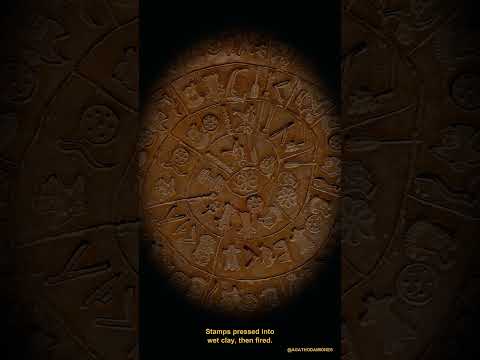 Phaistos Disc Heraklion Archaeological MuseumAgatho Damon
-
 Heraklion Archaeological Museum AR experienceWebXR
-
 Statue of Roman Emperor Hadrian in Heraklion Archaeological Museum on…Potan's War - ASMR for Men
-
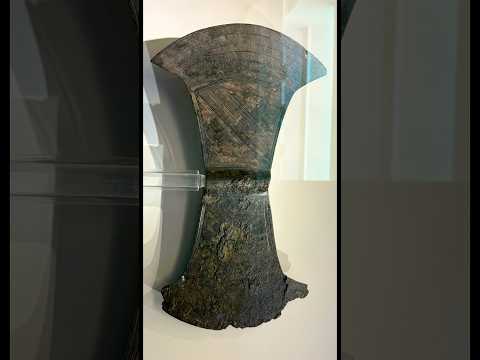 Bronze Labryes axes from Crete - Heraklion Archaeological MuseumRazmafzarTV
-
 Breaking 😂 into the Phaistos Disk in The Heraklion Archaeological Mus…PrideCZ
-
 Stone Bull‘s-Head Rhyton from the Heraklion Archaeological MuseumRazmafzarTV
Accessibility
- All collections All collections are fully accessible again since the museum reopened in 2014.
Sources: Heraklion Archaeological Museum - Wikipedia · Heraklion - Wikivoyage (see) · Archäologisches Museum Iraklio - Wikipedia · Αρχαιολογικό Μουσείο Ηρακλείου - Wikipedia · Musée archéologique d'Héraklion - Wikipedia · checked 18 Oct 2026
- Website
- heraklionmuseum.gr/
- Phone
- +30 281 027 9000
Questions and answers
Where is the Heraklion Archaeological Museum, and how do I contact it?
It is at 2 Xanthoudidou Street in the town centre of Heraklion, at the junction with Hatzidaki Street. The phone number is +30 281 027 9000.
Is the Heraklion Archaeological Museum accessible for visitors with reduced mobility?
Yes. All of its collections have been fully accessible again since the museum reopened in 2014.
When was the Phaistos Disc found?
Luigi Pernier found the Phaistos Disc in 1908 during excavations. It is displayed in room III of the Heraklion Archaeological Museum.
Where are the frescoes in the Heraklion Archaeological Museum?
Frescoes are shown in rooms XIV, XV and XVI on the upper floor. Frescoes from Knossos and Agia Triada share one room.
- See who's going — faces, not ticket counts.
- Write to someone who shares your interests — no swipes, no matches, no paywall.
- Pick the event or the place to meet at — and go together.