

 Photo: Simon Burchell · CC BY-SA 4.0 · edited
 Photo: Simon Burchell · CC BY-SA 4.0 · edited
 Photo: Simon Burchell · CC BY-SA 4.0 · edited
 Photo: Simon Burchell · CC BY-SA 4.0 · edited
 Photo: Simon Burchell · CC BY-SA 4.0 · edited
 Photo: Simon Burchell · CC BY-SA 4.0 · edited
 Photo: Simon Burchell · CC BY-SA 4.0 · edited
 Photo: Simon Burchell · CC BY-SA 4.0 · edited
 Photo: Simon Burchell · CC BY-SA 4.0 · edited
 Photo: Simon Burchell · CC BY-SA 4.0 · edited
 Photo: Simon Burchell · CC BY-SA 4.0 · edited
 Photo: Simon Burchell · CC BY-SA 4.0 · edited
Muralla Romana De Lugo
Sign up free — See who's going and message them.
About
More photos 11
1 / 11 Simon Burchell · CC BY-SA 4.0 · edited
Why go
- The approximately 2.1-kilometre rampart circuit around Lugo’s historic centre.
- One of the Iberian Peninsula’s best-preserved Roman walls, with much of its original appearance intact after more than 17 centuries.
- Porta Miñá’s original vaulted arch between two towers.
- A Mosqueira’s surviving upper windows, which show that the towers originally had two storeys.
Interesting facts6
-
 34.4 hectares
The walls enclose 34.4 hectares and stand 8–12 metres high, with a thickness of about 4.2 metres.
Roman walls of Lugo - Wikipedia -
 20 metres
The defences included an open strip inside the walls and an outer ditch about 20 metres wide and four metres deep; only traces of the ditch remain.
Römische Stadtmauer von Lugo - Wikipedia -

Stone facings surround a core of earth, gravel, pebbles and reused Roman masonry.
Roman walls of Lugo - Wikipedia -
 1853
Five gates are Roman; five more were opened between 1853 and 1921 as the city expanded.
Muralla romana de Lugo - Wikipedia -

Porta Falsa was used by the garrison.
Muraille de Lugo - Wikipedia -

The towers are mostly semicircular, with some rectangular examples.
Roman walls of Lugo - Wikipedia
Shorts
-
 Visito lugo, una ciudad donde la gente hace footing por su muralla ro…Topeados de viaje
-
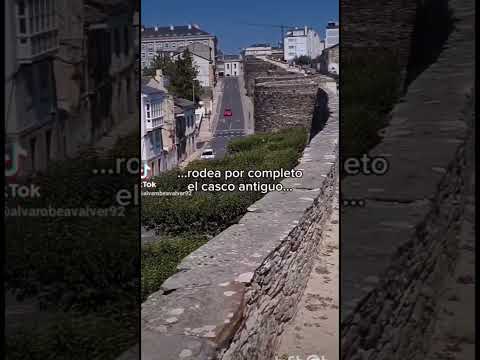 la muralla romana de Lugo mejor conservadas en Galicia EspañaEl tuno y norteño
-
 Lugo tiene la única muralla romana que está intacta en el mundo.Una Pareja En Ruta
-
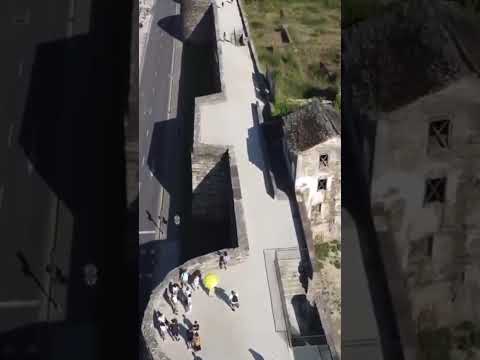 Muralla de Lugo 🇪🇸, la única muralla romana completa.dgeography
-
 Así es uno de los Patrimonios de la Humanidad en España: Muralla roma…Viajando con Piti & Emi
-
 Lugo:su muralla romanaVOZ FRANCA
-
 Muralla romana de Lugo/GaliciaRosangela Santos
-
 Conociendo la Muralla Romana de Lugo.Alma de Gaviota
History
The wall also served as a tax boundary, where tolls were collected and people checked. Its wooden gates remained in use to varying degrees until the 19th century and disappeared after 1877.
- Late 3rd–early 4th centuryThe present wall replaced an earlier enclosure, with construction finishing around the turn of the fourth century.
- 16 April 1921The wall was declared a cultural monument.
- 30 November 2000The wall joined UNESCO’s World Heritage List.
- 1972Major restoration work began, including the demolition of buildings attached to the ramparts.
- 2015The wall also became part of the Camino Primitivo World Heritage site.
Best time to visit
- Open 24 hours every day.
Sources: Roman walls of Lugo - Wikipedia · Página no encontrada | Ministerio de Cultura · Muralla romana de Lugo - Wikipedia · Römische Stadtmauer von Lugo - Wikipedia · Muraille de Lugo - Wikipedia · checked 10 Oct 2026
Questions and answers
When are the Roman walls of Lugo open?
The walls are open 24 hours every day.
How can I reach the rampart walkway?
Five stairways and a ramp lead to the walkway.
Are all the gates pedestrian-only?
Six gates are pedestrian-only; four also allow motor traffic.
Which gate faces the cathedral?
Porta Santiago stands directly opposite the cathedral’s west façade.
Which gates are associated with the Camino?
Camino Primitivo pilgrims enter Lugo through Porta de San Pedro; Porta Santiago is the traditional exit toward Santiago de Compostela.
- See who's going — faces, not ticket counts.
- Write to someone who shares your interests — no swipes, no matches, no paywall.
- Pick the event or the place to meet at — and go together.