


New York Transit Museum
- from USD 15
- Not step-free
- Ideal for kids, teens
Sign up free — See who's going and message them.
What's on here
 Transit TotsSun, 15 Nov, 09:30
40 USD
 Day Habilitation DayTue, 17 Nov, 10:30
Free
Transit TotsSun, 22 Nov, 09:30
40 USD
 Holiday Nostalgia RidesSun, 29 Nov, 10:00
Transit TotsSun, 6 Dec, 09:30
40 USD
Holiday Nostalgia RidesSun, 6 Dec, 10:00
Transit TotsSun, 13 Dec, 09:30
40 USD
Holiday Nostalgia RidesSun, 13 Dec, 10:00
About
More photos 8
1 / 8


Why go
- See around 20 historic subway and elevated railway cars.
- See vintage turnstiles, including 1939 World’s Fair examples that charged on entry and exit.
- Take the driver’s seat in a bus installation.
Opening hours
Today10:00 – 16:00Show all
Don't miss
- Original 137th Street station mosaic plaqueThe plaque dates to the subway’s 1904 opening.On display in the museum.
- Moving the MillionsThis platform level exhibit traces the subway from private operators to MTA New York City Transit.Platform level.
- Vintage subway car advertisements and route mapsHistoric cars retain vintage advertisements and route maps inside.Inside the subway cars on display.
- MetroCard exhibitionTraces the card’s origins, rollout, technology and cultural impact as OMNY takes over payment.In the museum.
- Orange and yellow bucket seat artworkFourteen artists pay tribute to seats introduced on R44 cars in 1971.In the museum.
Know before you go
- Groups of nine or more need a scheduled tour.
- Visitors cannot re-enter after leaving the museum.
- Eating is not allowed inside, and there are no lunch tables.
- Children aged 15 and under must stay with an adult.
What's inside
- The museum has two underground levels: the mezzanine and the station platform.
- “Ticket to Ride” traces fare collection across New York transport using archival material and collection objects.
- The Dr. George T.F. Rahilly Study Center displays more than 50 scale models, with a focus on Brooklyn.
- A screening room presents educational posters and videos about courtesy and safety.
- The mezzanine has restrooms, water fountains and a gift shop.
With kids
- The museum runs art activities for visitors.
- The museum app includes transit history, trivia, photo filters and scavenger hunts across the five boroughs and at Grand Central Terminal.
Tips for your visit
- There is no cell phone service inside; save onward directions before entering.
- There is no bag or coat check; bring only what you can carry.
Tours and audio guides
- Tours
- Museum and offsite tours The museum also runs subway walking tours.
- Retired-train rides
- Excursions on preserved subway cars Most preserved railcars remain operational; some run on excursions.
- Programs
- Lectures, seminars and films Programs are offered for all ages.
Interesting facts2
-
 1960
Court Street became a film location around 1960, including for the 1974 film The Taking of Pelham One Two Three.
New York Transit Museum - Wikipedia -

A band of aquamarine tiles edged in cerulean blue runs along the station walls.
New York Transit Museum - Wikipedia
Shorts
-
 New York Transit Museum Vintage Oldest Train! Parade of Trains Day. B…FaLO66traintravels
-
 A New York City Gem - NY Transit MuseumMarlon Torres
-
 Let’s visit the New York City Transit MuseumBeanie Baby Trader
-
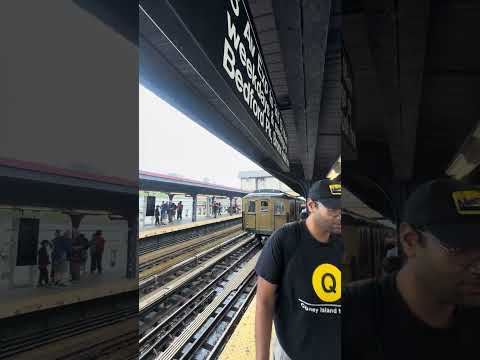 Brooklyn, New York - New York Transit MuseumMORTAL KOMBAT (007)
-
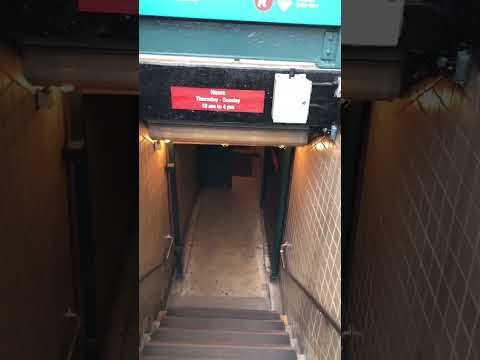 NY Transit Museum | Walking into the New York transit museumDaily Manhattan
-
 New York Transit Museum!The Asuncions
-
 New York Transit Museum in Brooklyn. Specifically, it's situated at 9…Guitar By Sam Martinez 🎸
-
 The New York Transit MuseumAngel Cuji
History
The planned through service never began; trains only ran as shuttles to Hoyt–Schermerhorn Streets. After the station closed, a transit exhibit opened there for the US Bicentennial. It became a permanent museum, later expanding its focus to other regional transport services.
- Original roleCourt Street was planned as the western terminus of the IND Fulton Street local. A Second Avenue connection was also planned, but trains only ran as shuttles to Hoyt–Schermerhorn Streets.
- 1946Court Street station closed to passengers on June 1 after low use and difficult access.
- 1976The New York City Transit Exhibit opened on July 4 for the US Bicentennial. Strong attendance led to a permanent museum.
- Mid-1990sThe Metropolitan Transportation Authority took control from the New York City Transit Authority and broadened the museum’s scope to regional transport.
Accessibility
- Main entrance The entrance at the northwest corner of Boerum Place and Schermerhorn Street has two flights of stairs.
- Wheelchair-accessible entrance At Schermerhorn and Court Streets.
- Accessible lift Request it in advance or use its call button.
Sources: New York Transit Museum - Wikipedia · Brooklyn/Downtown - Wikivoyage (see) · Homepage - New York Transit Museum · Homepage - New York Transit Museum · Know Before You Visit - New York Transit Museum · New York Transit Museum - Wikipedia · New York Transit Museum - Wikipedia · checked 3 Oct 2026
- Website
- nytransitmuseum.org/
- Phone
- 7186941600
Questions and answers
When is the New York Transit Museum open?
The Brooklyn museum is open Wednesday–Sunday, 10:00–16:00.
How do I get to the New York Transit Museum?
The museum is at 99 Schermerhorn Street, at Boerum Place and Schermerhorn Street. More than 20 subway and bus lines serve the area.
Are full-size historic buses always on display at the New York Transit Museum?
The retired bus fleet is stored in city depots and brought out for special events, including the annual Bus Festival.
Can I visit the New York Transit Museum’s Archives?
Historians and researchers can arrange access to the nearby Archives through the museum.
When did the New York Transit Museum’s Bus Festival begin?
The annual tradition began in 1994.
- See who's going — faces, not ticket counts.
- Write to someone who shares your interests — no swipes, no matches, no paywall.
- Pick the event or the place to meet at — and go together.