

 Photo: Thenelar · CC BY-SA 4.0 · edited
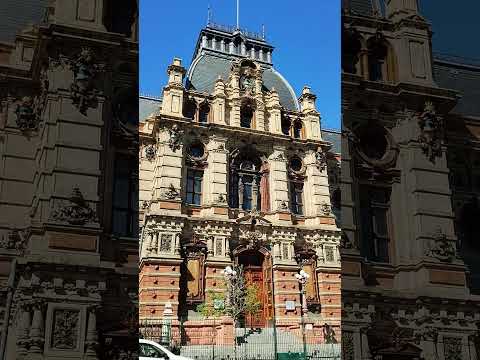
Palacio de Aguas Corrientes
Sign up free — See who's going and message them.
About
More photos 11
1 / 11
 HalloweenHJB (photo) Carl Nyströmer (1856–1913) and Olaf Boye (1864–1933) (building) · CC BY-SA 3.0 · edited


Why go
- The four façades carry over 300,000 multicolored glazed terra-cotta tiles imported from Royal Doulton.
Opening hours
Today09:00 – 13:00, 14:00 – 17:00Show all
Don't miss
- Glazed terra-cotta tilesMore than 300,000 multicolored tiles cover the façades.Across the four façades
- Provincial escutcheonsThe escutcheons represent Argentina’s 14 provinces at the time.On the façades
- Entrance caryatidsTwo caryatids flank the entrance.At the entrance
- Bust of Guillermo VillanuevaOlaf Boye made this bust of engineer Guillermo Villanueva.In the garden
Know before you go
- Open Monday to Friday, 09:00–13:00 and 14:00–17:00.
- The water network archive is not open to the public. Access to the plumbing plans is limited to authorized individuals.
What's inside
- AySA offices
- Historic archives
- Small water-works museum
Tips for your visit
- The water-network archive and plumbing-plan collection are not open for general public access.
Interesting facts4
-
 180 columns
The iron structure was made in Belgium and rests on 180 columns.
Palacio de Aguas Corrientes - Wikipedia -
 72,000 cubic
Six tanks across three floors originally held more than 72,000 cubic metres of drinking water; when full, the structure weighed 135,000 tonnes.
Palais des Eaux courantes - Wikipedia -
 1870
The water network archive holds about 60,000 plans, with the oldest dating to 1870; the archive is not open to the public.
Palacio de Aguas Corrientes - Wikipedia -
 2,800,000 plans
The plumbing plans collection contains about 2,800,000 plans, including plans of demolished buildings; access is limited to authorized individuals.
Palacio de Aguas Corrientes - Wikipedia
Shorts
-
 Palacio de las Aguas CorrientesVendiendo Humo
-
 Palacio de las Aguas Corrientesrecorriendociudades
-
 Palacio de las Aguas CorrientesBuenos Aires
-
 Palacio de las Aguas CorrientesBuenos Aires Oculta
-
 Palacio de aguas corrientes (aysa), ciudad de Buenos Aires ArgentinaFernando Massara
-
 Palacio de Aguas Corrientes, Buenos Aires, ArgentinaBahia Cesar
-
 Palacio de las Aguas Corrientes de Buenos AiresPorque me gusta viajar
-
 Teatro Colón y el Palacio de Aguas CorrientesMarcos Vitale
History
The palace was planned as a reservoir to replace household cisterns and improve access to drinking water. It opened in 1894, with six tanks across three floors.
- 1870sThe site was selected for a large drinking-water reservoir intended to protect public health.
- 1877Olaf Boye, Carlos Nyströmer and John Baterman designed the palace.
- 1894The building opened after construction began in 1887.
- 1978The pumps were dismantled and the building became a museum.
- 1989The building was declared a National Historic Monument.
Sources: Palacio de Aguas Corrientes - Wikipedia · Palais des Eaux courantes - Wikipedia · checked 28 Oct 2026
- See who's going — faces, not ticket counts.
- Write to someone who shares your interests — no swipes, no matches, no paywall.
- Pick the event or the place to meet at — and go together.