

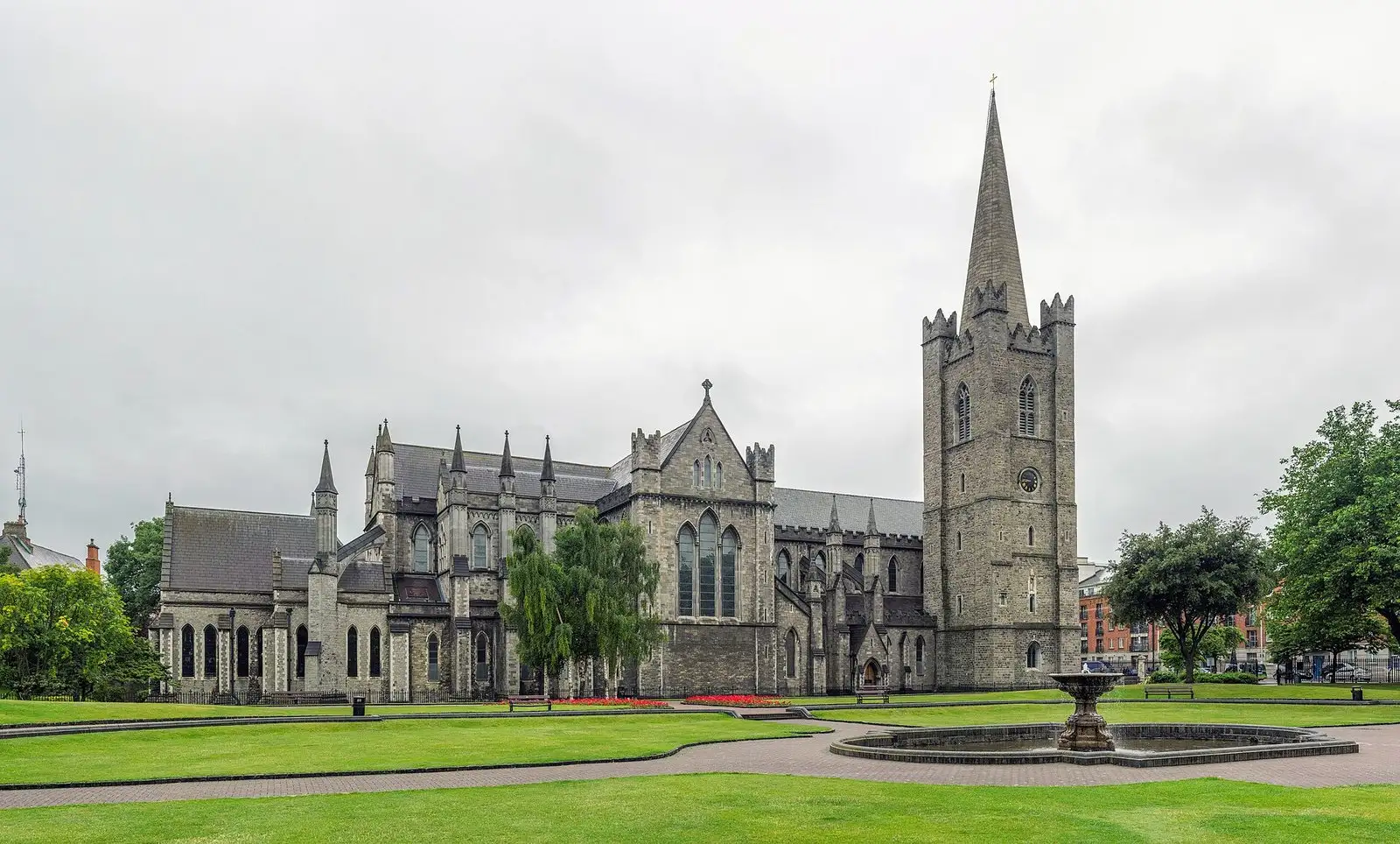
Saint Patrick s Cathedral
Adult EUR 11.50 · Student/Senior EUR 10 · Child EUR 5.50
Sign up free — See who's going and message them.
Is this your place? Get the badge for your websiteAbout
More photos 11
1 / 11


Why go
- See Jonathan Swift’s grave and epitaph in the cathedral where he served as dean.
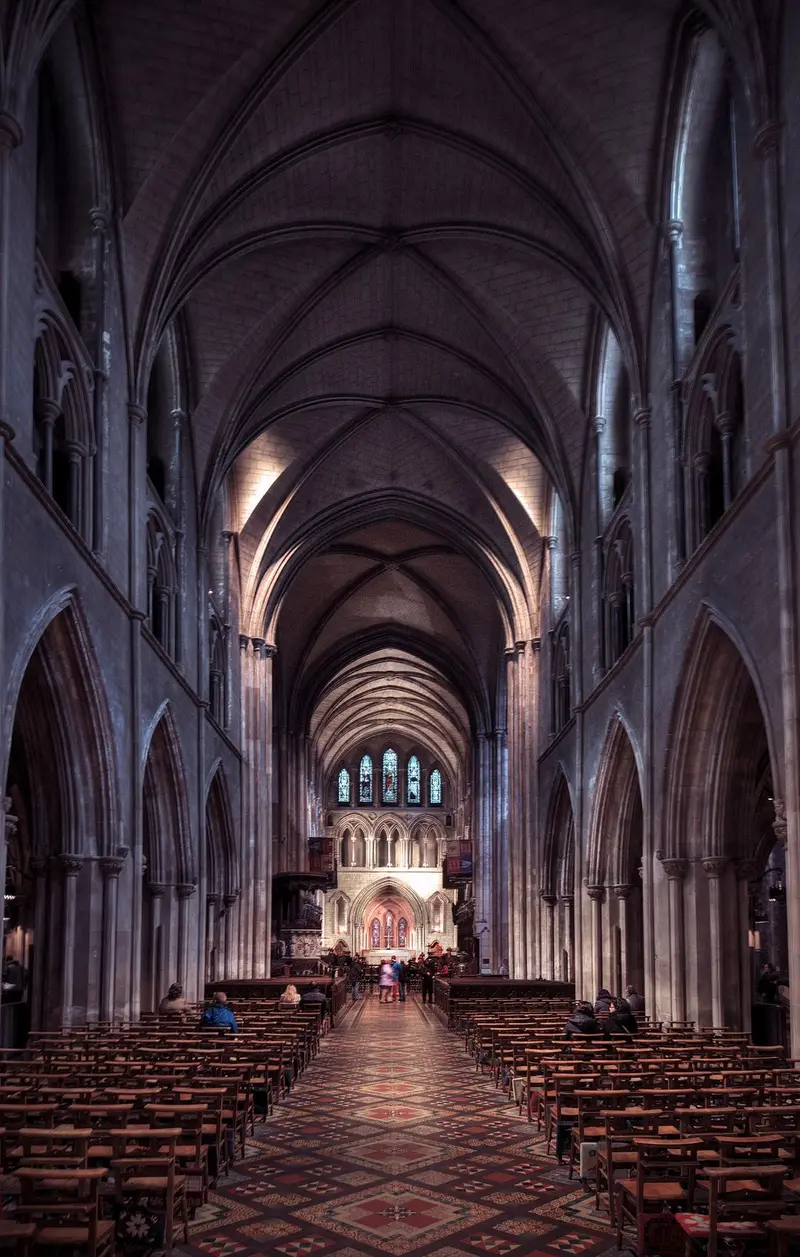
- See the cathedral organ, with more than 4,000 pipes and parts dating to 1695.
- View the 17th-century Boyle family tomb dedicated to Katherine, Richard Boyle’s second wife.
Plan your visit
Prices
From the venue's website · checked 27 Oct 2026
Opening hours
Today09:30 – 17:00Show all
Don't miss
- Swift’s death mask and portable pulpitLook for Jonathan Swift’s death mask and portable pulpit.North transept
- Sir Benjamin Guinness’s statueA statue by JH Foley stands here.Outside the south door
Know before you go
- Visitors can tour the cathedral.
Legends and hidden details
- A hole in a door at the west end of the nave is traditionally linked to an attempted truce between Lords Kildare and Ormonde in 1492.
Services and visiting hours
- Worship — December
- The Service of Nine Lessons and Carols is held twice, including on 24 December.
- Bell ringing — Sundays
- The bells are rung for services.
- Bell practice — Tuesday nights
- Bell practice.
- Learner bell practice — Saturday mornings
- Learner practice.
- Events — November
- Ireland’s Remembrance Day ceremonies take place at the cathedral.
- Events — autumn Saturdays
- Technological University Dublin holds graduation ceremonies at the cathedral.
Interesting facts6
-
 1860
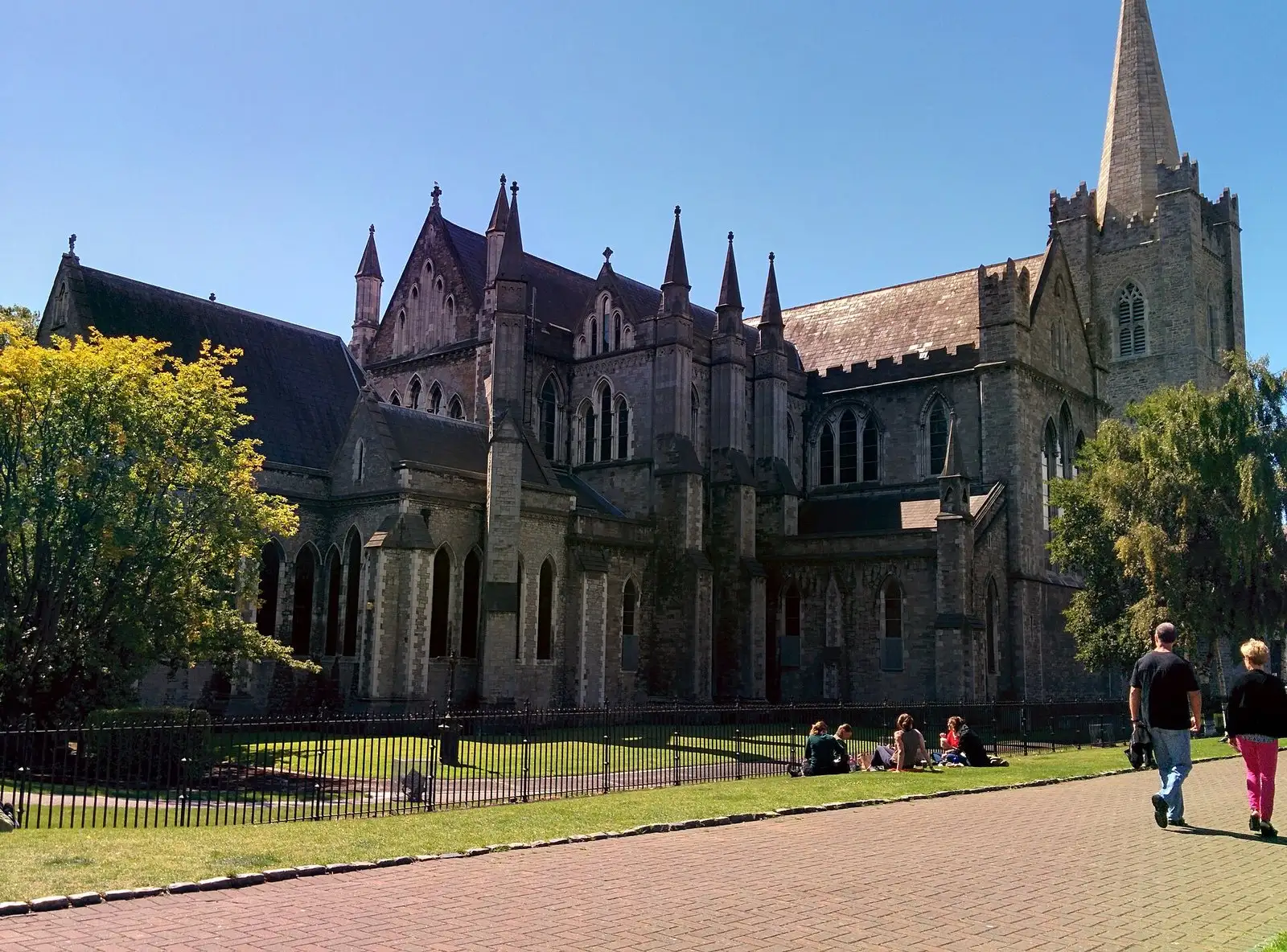
Benjamin Guinness funded a major reconstruction in 1860–65, leaving much of the current building and decoration Victorian.
St Patrick's Cathedral, Dublin - Wikipedia (part 2) -
 70 stops
The organ has 70 stops across four manuals and a pedal.
St. Patrick’s Cathedral (Dublin) - Wikipedia -

Henry of London, who oversaw much of the building work, was a signatory to Magna Carta.
St Patrick's Cathedral, Dublin - Wikipedia -

The cathedral’s organ history reaches back to the 15th century.
St. Patrick’s Cathedral (Dublin) - Wikipedia -
 12 bells
The main peal has 12 bells tuned to C; the cathedral also has three semitone bells.
St Patrick's Cathedral, Dublin - Wikipedia (part 3) -
 500 people
More than 500 people are buried beneath the cathedral floor and in its graveyard.
St Patrick's Cathedral, Dublin - Wikipedia (part 3)
Shorts


History
Saint Patrick’s and Christ Church disputed rights and precedence for centuries.
- 5th centuryThe cathedral’s origins date to this period, but no original buildings survive.
- Before 1191An earlier church stood beside a holy well on an island between two branches of the River Poddle. John Comyn elevated the church to collegiate status and had the earlier building demolished to make way for the cathedral.
- 1191The cathedral was founded.
- 1191–1270The foundations of the present building were constructed.
- 1254The cathedral was rededicated after reconstruction in Early English Gothic style.
Show all
- c. 1270The Lady Chapel was added.
- 1300An agreement recognised both Dublin cathedrals and set terms for sharing their status.
- 1362–1370After a fire, the tower and west nave were rebuilt.
- From the mid-14th centuryThe north transept served as a parish church outside the city proper for more than 500 years.
- c. 1537After the Reformation, the cathedral became an Anglican Church of Ireland church.
- 1544The nave collapsed after a period of neglect.
- 1666The Lady Chapel was offered to French-speaking Huguenots who had fled to Ireland.
- 1671A new roof was completed after the old roof was removed because it risked collapse.
- 1690After briefly regaining the cathedral during the Williamite War, James II and Catholics lost it to Anglican ownership.
- 1713–1745Jonathan Swift served as dean.
- 1742Singers from the cathedral choir school took part in the first performance of Handel’s Messiah.
- 1749George Semple added the spire.
- 1783–1871The cathedral served as the chapel of the Order of Saint Patrick.
- 1805The north transept was in ruins, and the south transept was in poor condition.
- Mid-19th centuryA restoration renewed the Lady Chapel and lowered the floor to its original level. A Celtic cross found nearby may have marked the former holy well.
- 1860–1865A reconstruction removed medieval chantries; few records of the work survive.
- 1870The Church of Ireland formally designated Saint Patrick’s its national cathedral.
- 1871Christ Church became the Dublin diocese’s sole cathedral, while Saint Patrick’s became the senior church for the rest of Ireland.
- 1909A new peal of twelve bells was completed, Ireland’s first ring of twelve.
- 1911The first peal rung in the tower was the first tower-bell peal rung outside England.
- 1949 and 1974Funerals for Irish presidents Douglas Hyde and Erskine Childers were held at the cathedral.
- 2006Eighteen Afghan migrants seeking asylum occupied the cathedral for several days.
Sources: St Patrick's Cathedral, Dublin - Wikipedia · St Patrick's Cathedral, Dublin - Wikipedia (par… · St Patrick's Cathedral, Dublin - Wikipedia (par… · Dublin - Wikivoyage (see) · St. Patrick’s Cathedral (Dublin) - Wikipedia · Cathédrale Saint-Patrick de Dublin - Wikipedia · checked 24 Sep 2026
- Website
- stpatrickscathedral.ie/
- Phone
- +353 1 453 9472
- See who's going — faces, not ticket counts.
- Write to someone who shares your interests — no swipes, no matches, no paywall.
- Pick the event or the place to meet at — and go together.