


The Museum At Dumbarton Oaks
Sign up free — See who's going and message them.
Is this your place? Get the badge for your websiteAbout
What's on here

Why go
- More than 1,200 Byzantine objects dating from the fourth to fifteenth centuries.
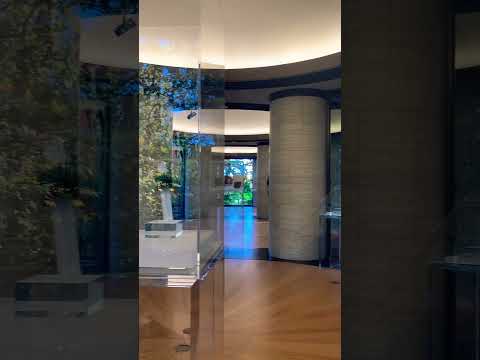
- Philip Johnson’s Pre-Columbian Pavilion, with curved glass walls visually connecting its galleries to the gardens.
Opening hours
Today11:00 – 17:00Show all
Don't miss
- Antioch mosaicsAncient mosaics excavated by Princeton University archaeologists in the 1930s.Byzantine collection
- Music Room masterpiecesA Madonna by Tilman Riemenschneider and paintings by El Greco and Edgar Degas.Music Room
- Pavilion fountain courtEight domed circular galleries surround an open-air fountain court.Pre-Columbian Pavilion
Know before you go
- Admission to the museum and Rare Book Library is free and unticketed.
- The Rare Book Library is open to the public on Saturdays and Sundays.
What's inside
- The House Collection encompasses historic interiors, artworks and furnishings from Asia, Europe and America.
- The Byzantine holdings also include Greek, Roman, western medieval, Near Eastern, Egyptian and Islamic objects.
Interesting facts6
-

Many Byzantine objects use gold, silver, enamel, or ivory.
Dumbarton Oaks - Wikipedia -
The Byzantine holdings include more than two hundred textiles and six manuscripts.
Dumbarton Oaks - Wikipedia -
Four glazed planter areas sit between the pavilion galleries and fountain.
Dumbarton Oaks - Wikipedia -
Each pavilion gallery is twenty-five feet in diameter.
Dumbarton Oaks - Wikipedia -
The galleries have Illinois Agatan marble columns and teak floors edged with green Vermont marble.
Dumbarton Oaks - Wikipedia -
100,000 volumes
The institution’s research libraries contain more than 100,000 volumes.
Dumbarton Oaks - Wikipedia
Shorts


History
The estate was the home of diplomat Robert Woods Bliss and his wife, Mildred Barnes Bliss, whose collecting shaped the museum. The Music Room continues to host musical programmes and scholarly lectures.
- 1800The Federal-style house was built.
- 1912Robert Woods Bliss began building the Pre-Columbian art collection.
- 1920Robert Woods Bliss bought the house.
- 1921–1923The Blisses hired Frederick H. Brooke to renovate and enlarge the house.
- 1938Stravinsky’s Dumbarton Oaks Concerto, composed for the Blisses’ thirtieth wedding anniversary, premiered in the Music Room.
Show all
- 1940The Blisses gave the house, collections and grounds to Harvard University to establish the research library and collection.
- 1944An international conference at the house helped prepare proposals for the United Nations.
- 1963Philip Johnson’s separate exhibition wing of connected circular glass-walled pavilions opened.
- 2008The main house and museum wing underwent extensive renovation, including restoration of historic period rooms.
How to get there
- On footMuseum entrance: 1703 32nd Street NW.
- TrainDupont Circle station is on the Red Line. Foggy Bottom–GWU station is on the Blue, Orange and Silver lines. From either station, walk or transfer to a Metrobus.
- BusMetrobus routes C91, D94 and D96 stop at Q and 31st Streets.
- BikeSecure bicycle racks are at the entrance. The nearest Capital Bikeshare station is at Wisconsin Avenue and 34th Street, two blocks away.
- ParkingThere is no visitor parking facility at the museum.
Sources: Dumbarton Oaks - Wikipedia · Washington, D.C./Georgetown - Wikivoyage (see) · Plan Your Visit — Dumbarton Oaks · Dumbarton Oaks - Wikipedia · Dumbarton Oaks - Wikipedia · checked 3 Oct 2026
- Website
- doaks.org/visit/plan
- Phone
- +1 202-339-6400
Questions and answers
What do the Maya relief panels at The Museum at Dumbarton Oaks depict?
They depict Maya kings.
What is the Copse at The Museum at Dumbarton Oaks?
It is one of the estate’s designed landscapes, where the Pre-Columbian Pavilion was built.
Who designed the Music Room at The Museum at Dumbarton Oaks?
Lawrence Grant White of McKim, Mead and White designed it.
What did Mildred Bliss collect for the garden library at The Museum at Dumbarton Oaks?
Botanical and garden-architecture rare books and garden-history reference materials.
What music did Aaron Copland write for The Museum at Dumbarton Oaks?
A nonet commissioned in 1958 for the Blisses’ fiftieth wedding anniversary. Nadia Boulanger conducted its premiere here on March 2, 1961.
- See who's going — faces, not ticket counts.
- Write to someone who shares your interests — no swipes, no matches, no paywall.
- Pick the event or the place to meet at — and go together.